


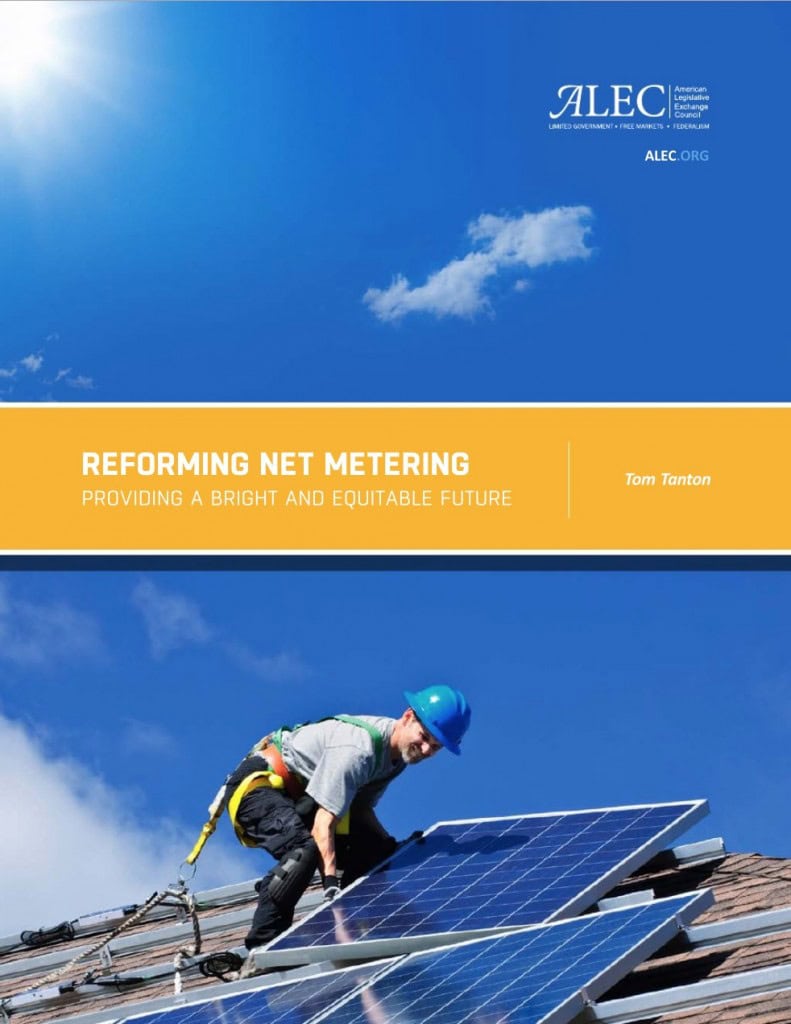
Across the country, more and more customers are using rooftop solar panels and other small-scale, on-site power sources known as distributed generation (DG). To encourage the introduction of these systems when they first came to market years ago, many states approved a billing system called net metering. Today, 43 states plus the District of Columbia have net metering policies and regulations. While these policies vary in details, DG customers are typically credited at the full retail electric rate for any excess electricity they generate. There are, however, a number of negative implications associated with such policies.
In Reforming Net Metering: Providing a Bright and Equitable Future, Tom Tanton, President of T² & Associates, (1) offers a primer on DG and net metering, (2) discusses the importance and value of the electric grid, (3) reviews existing studies on the cost and cost-shifting elements of net metering, and (4) provides an analysis of net metering from a competitive market perspective. Mr. Tanton has 40 years of experience in energy technology and legislative interface, having been central to many of the critical legislative changes that enable technology choice and economic development at the state and federal level.
Related Model Policies
Statement of Principles Uniformity of Energy Types and Technologies. All aspects of the compact shall pertain equally to all electric…
RESOLUTION RE: EXPRESSION OF SUPPORT FOR USE OF PROPANE AND NATURAL GAS IN NEW RESIDENTIAL AND COMMERCIAL BUILDING IN _________COUNTY AND SETTING OF CODE…
RESOLUTION RE: EXPRESSION OF SUPPORT FOR LAND USE AND PERMITTING FOR LESS THAN 5 ACRE COMMUNITY SOLAR GARDENS AND PROJECTS UP TO 160 ACRES…